Build practical AI systems with expert-led Live Labs from the Global AI Builder Series. Explore agents, RAG, memory, evaluation, deployment, security, and AI product building with Aishwarya Srinivasan, Arvind Narayanamurthy, and guest practitioners.
Coding agents inherited decades of software engineering infrastructure. Join Brendan O'Leary to explore what those advantages are and what it would take to give agents doing other kinds of work the same support.
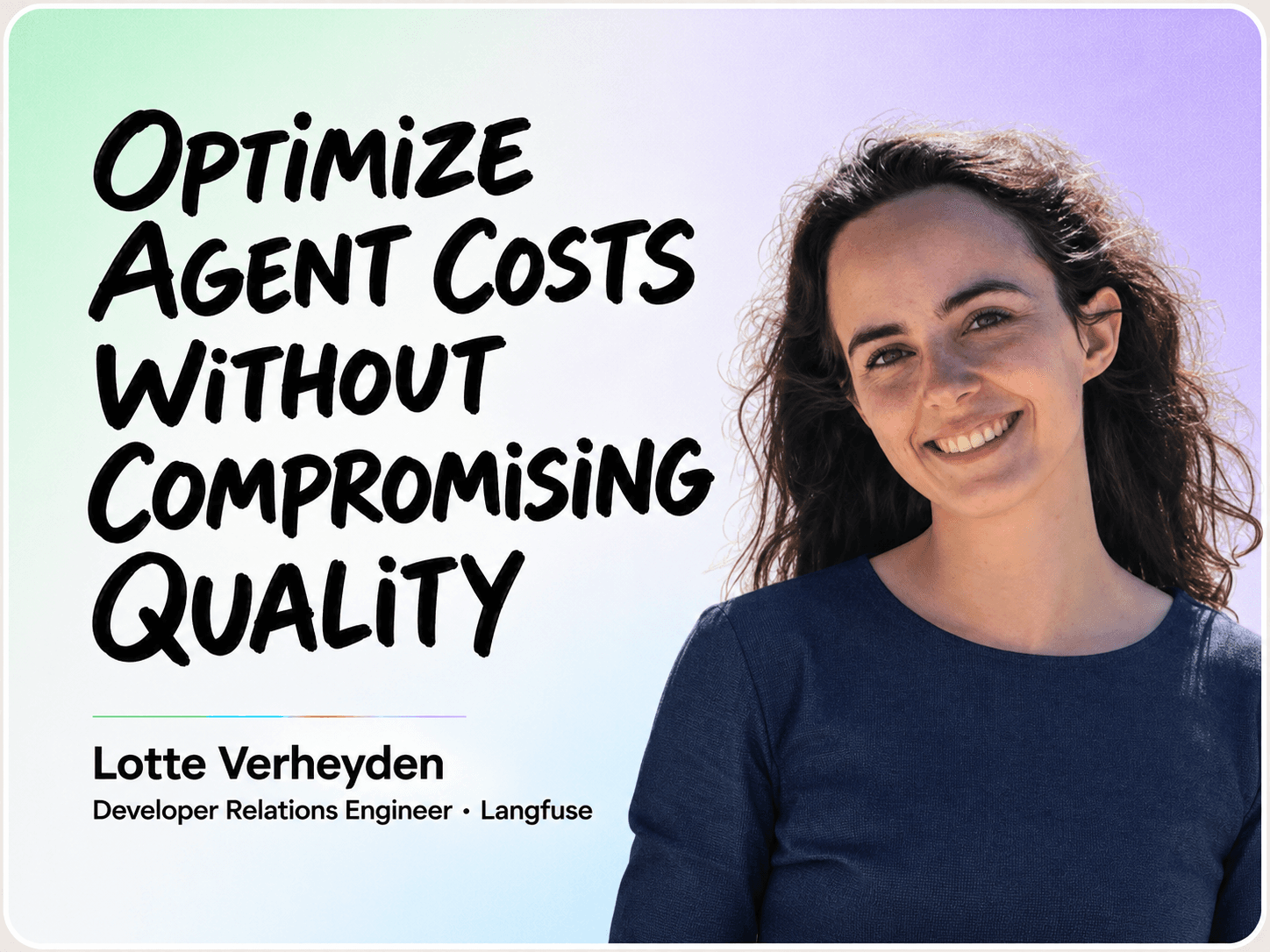
Reduce your AI agent’s running costs with Lotte Verheyden from Langfuse. Learn how to use tracing and evals, run consistent experiments, and choose cost-saving changes while checking their impact on quality.
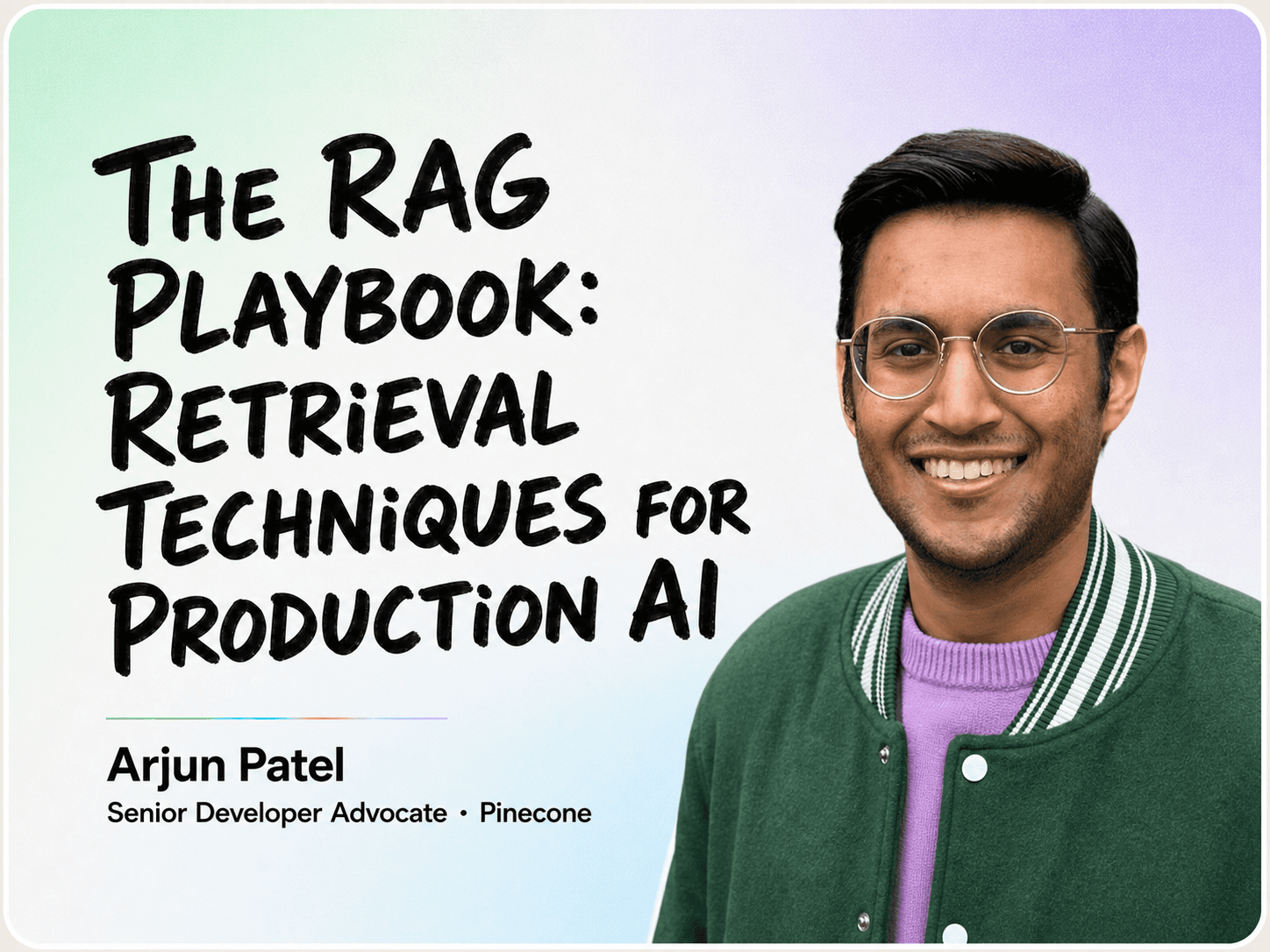
The RAG Playbook. Retrieval Techniques for Production AI
Improve your RAG system’s retrieval with Arjun Patel from Pinecone. Explore how to organize your data, choose the right search method, and benchmark retrieval quality for production AI applications.
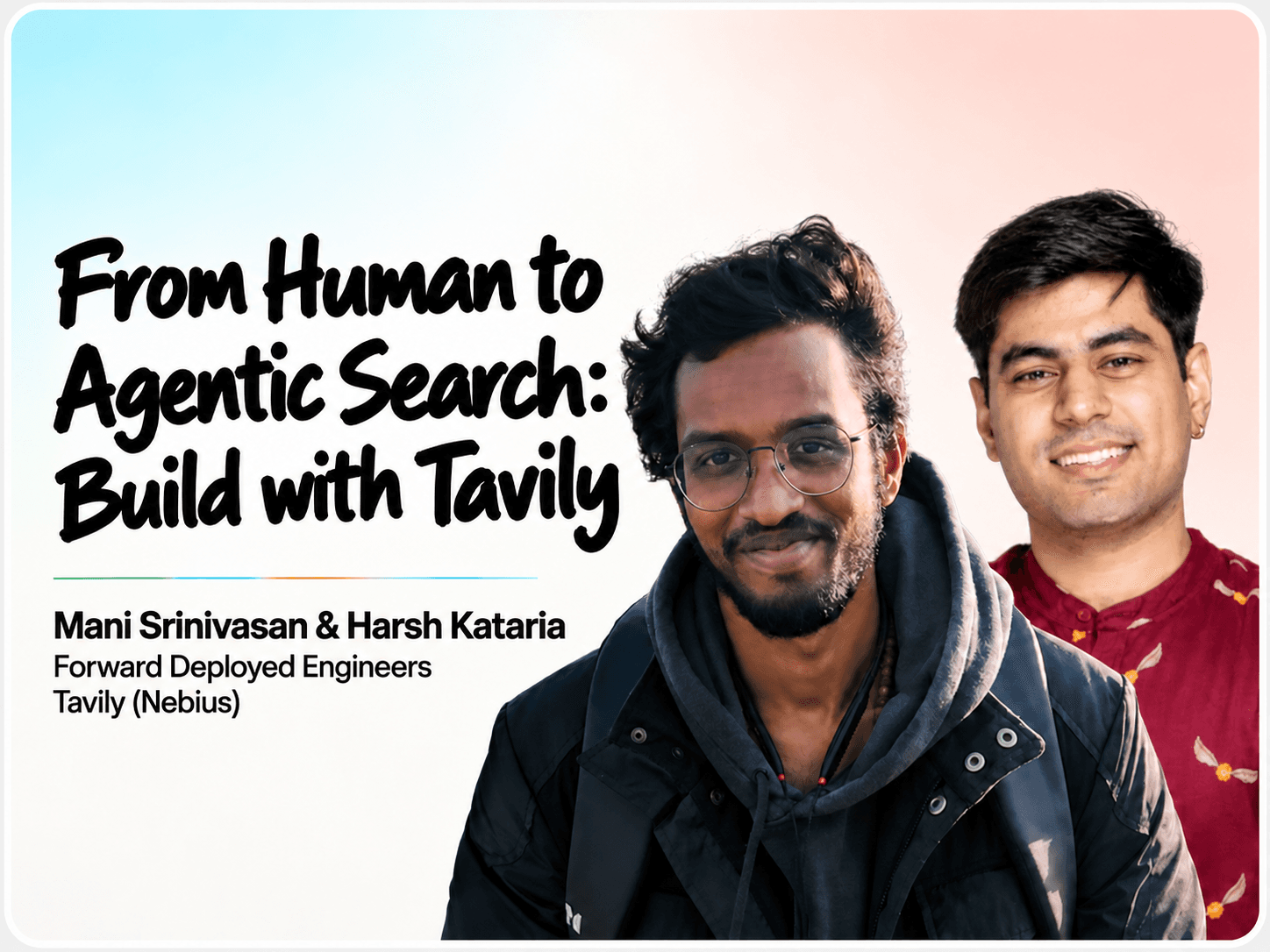
Watch a Tavily-powered agent turn web research into a company brief backed by sources. Join Mani Srinivasan and Harsh Kataria for a live demo, code walkthrough, and practical lessons on source quality, latency, and cost.
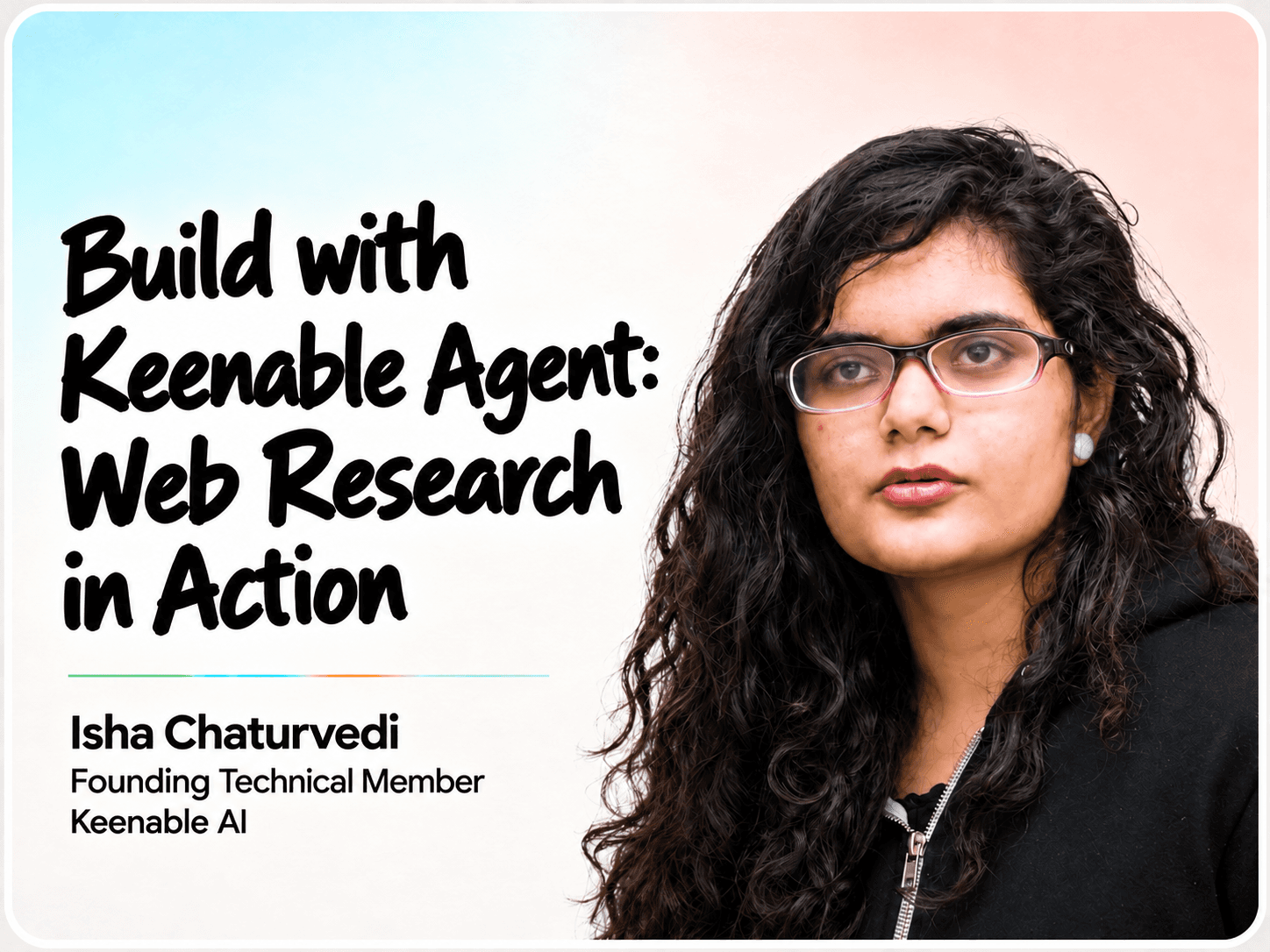
Build a practical web-research feature with Keenable Agent. Join Isha Chaturvedi from Keenable AI to see how an agent searches the web, reads sources, and returns cited answers. Learn to work with structured outputs, live streaming, and follow-up questions—and evaluate answer quality before using the results in your application.
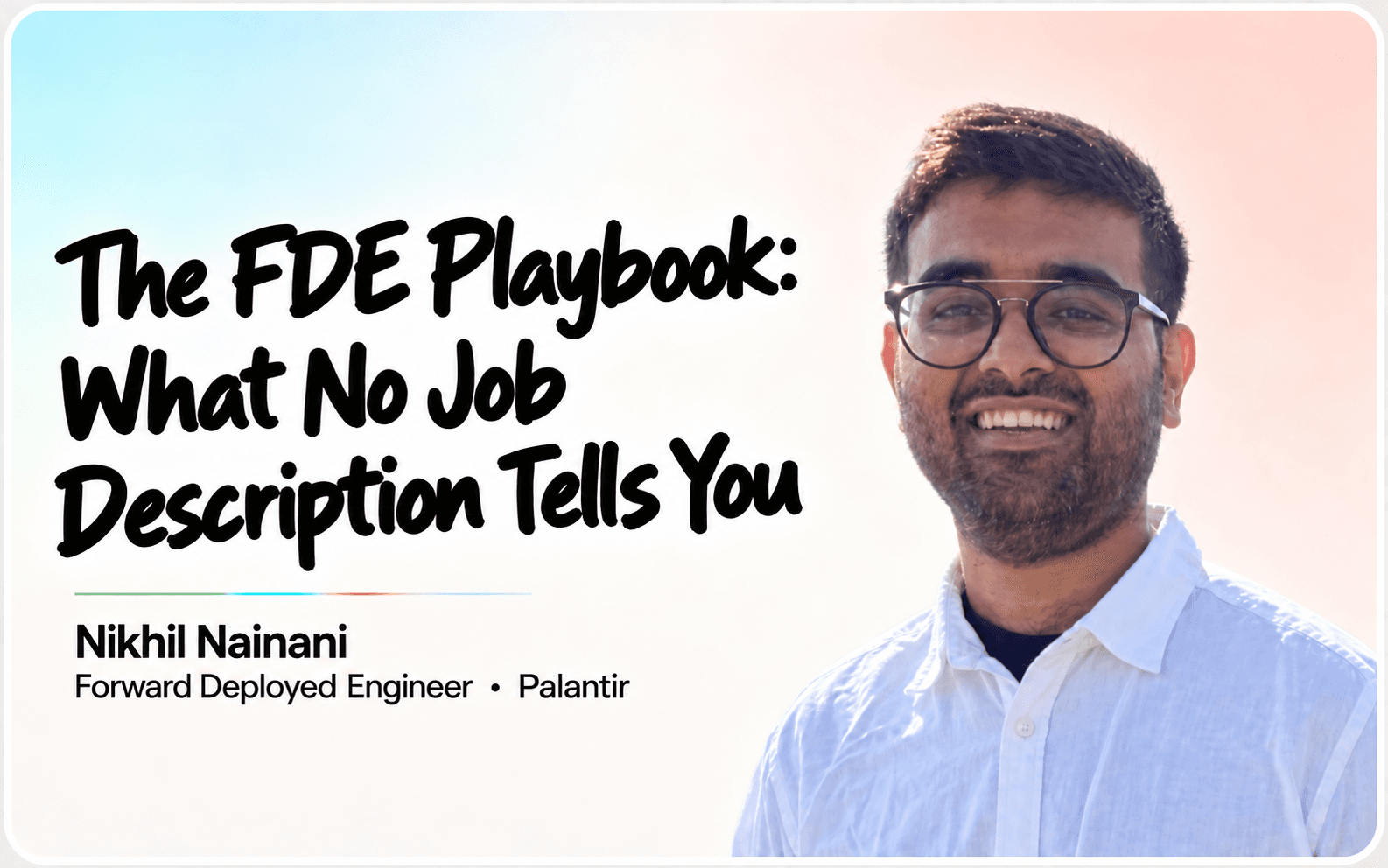
The FDE Playbook: What No Job Description Tells You
Nikhil Nainani shares lessons from four years as a Forward Deployed Engineer at Palantir. Explore customer discovery, ambiguous requirements, technical judgment, and the work of turning business needs into deployed AI systems.
Beyond Simple Agents: Building with LangChain Deep Agents
Build agents that can plan, manage context, and delegate work across longer tasks. Jess Weng explains LangChain Deep Agents, including memory, skills, summarization, context offloading, and subagents, and shows how these pieces support practical workflows.
Agentic workflows need decisions at every step: which tool to use, what to prioritize, and when to ask for help. Jev lets you turn those questions into structured outputs your code can use. In this session, you'll build a small request-routing workflow and learn how to handle uncertainty before it triggers the next action.
Open models are getting dramatically larger and more capable, which makes serving them efficiently a systems problem of its own. This session explores modern inference techniques used to make state-of-the-art open models practical in production, covering caching, kernels, quantization, speculative decoding, and disaggregated inference, with lessons from the recent Kimi K3 launch and its production-scale vLLM integration.
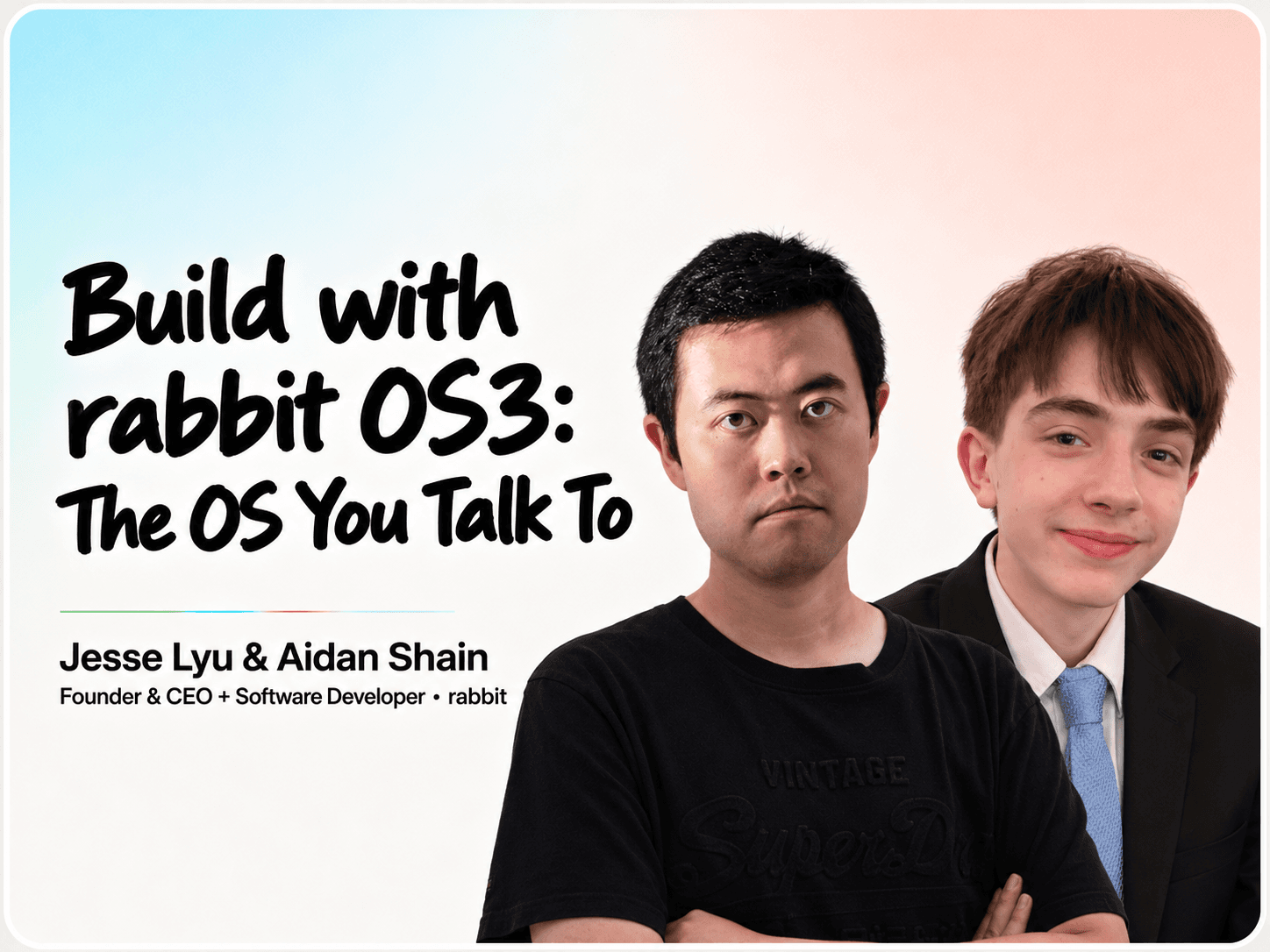
Jesse Lyu and Aidan Shain introduce rabbit OS3 and demonstrate its approach to an agentic operating system. Explore conversational tasks, connected devices, model switching, and the controls that guide actions across the system.
Loop and harness engineering is not another AI buzzword. In this masterclass, we move beyond the hype and focus on what it actually takes to build agents that work through tasks reliably. You’ll see how thoughtful loop design and the system around it can turn a promising demo into something capable of handling real work.
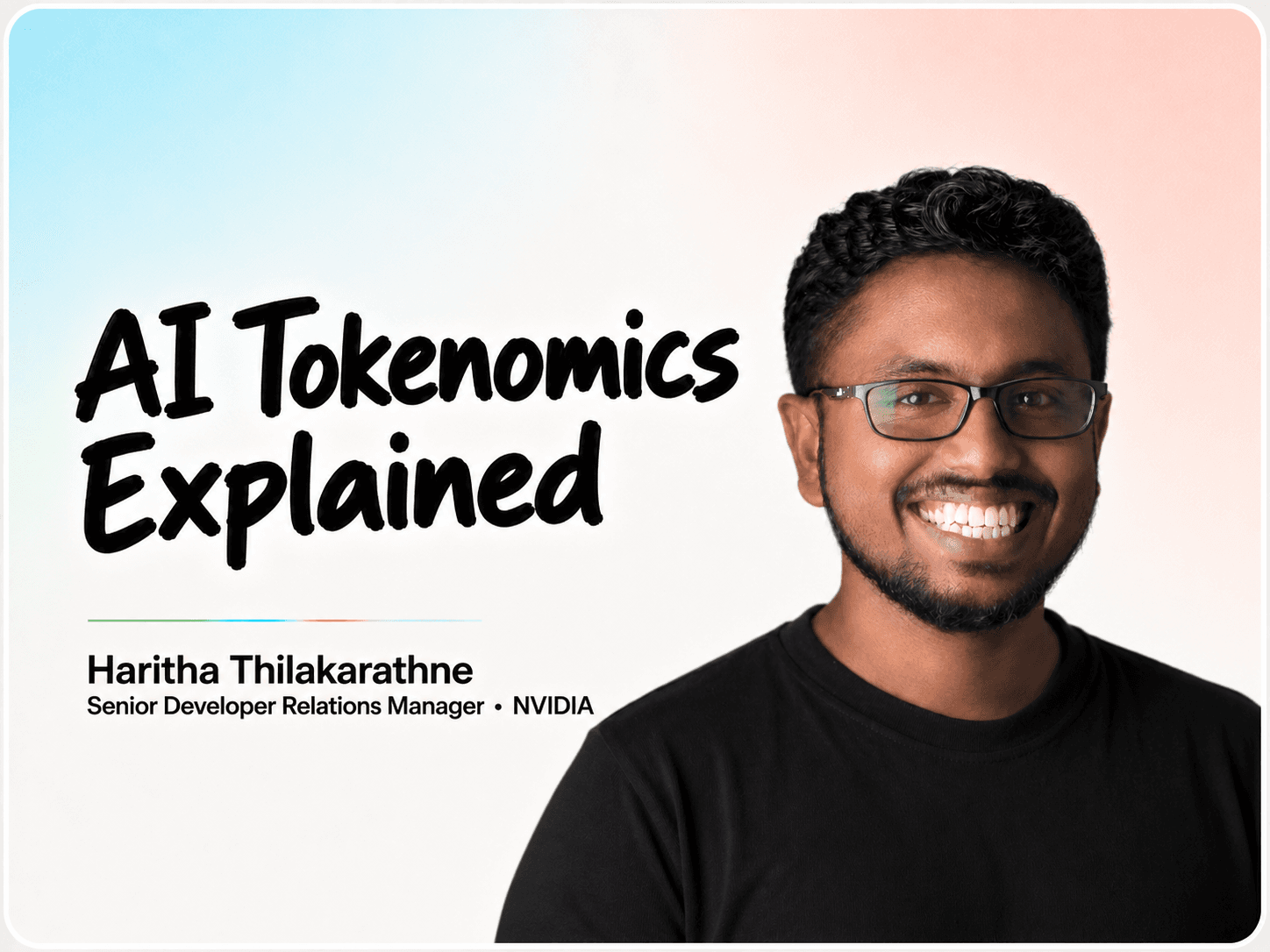
Haritha Thilakarathne explains the economics of AI tokens, connecting demand and supply with inference efficiency and monetization. Explore how these factors influence capacity, operating costs, and sustainable scaling.
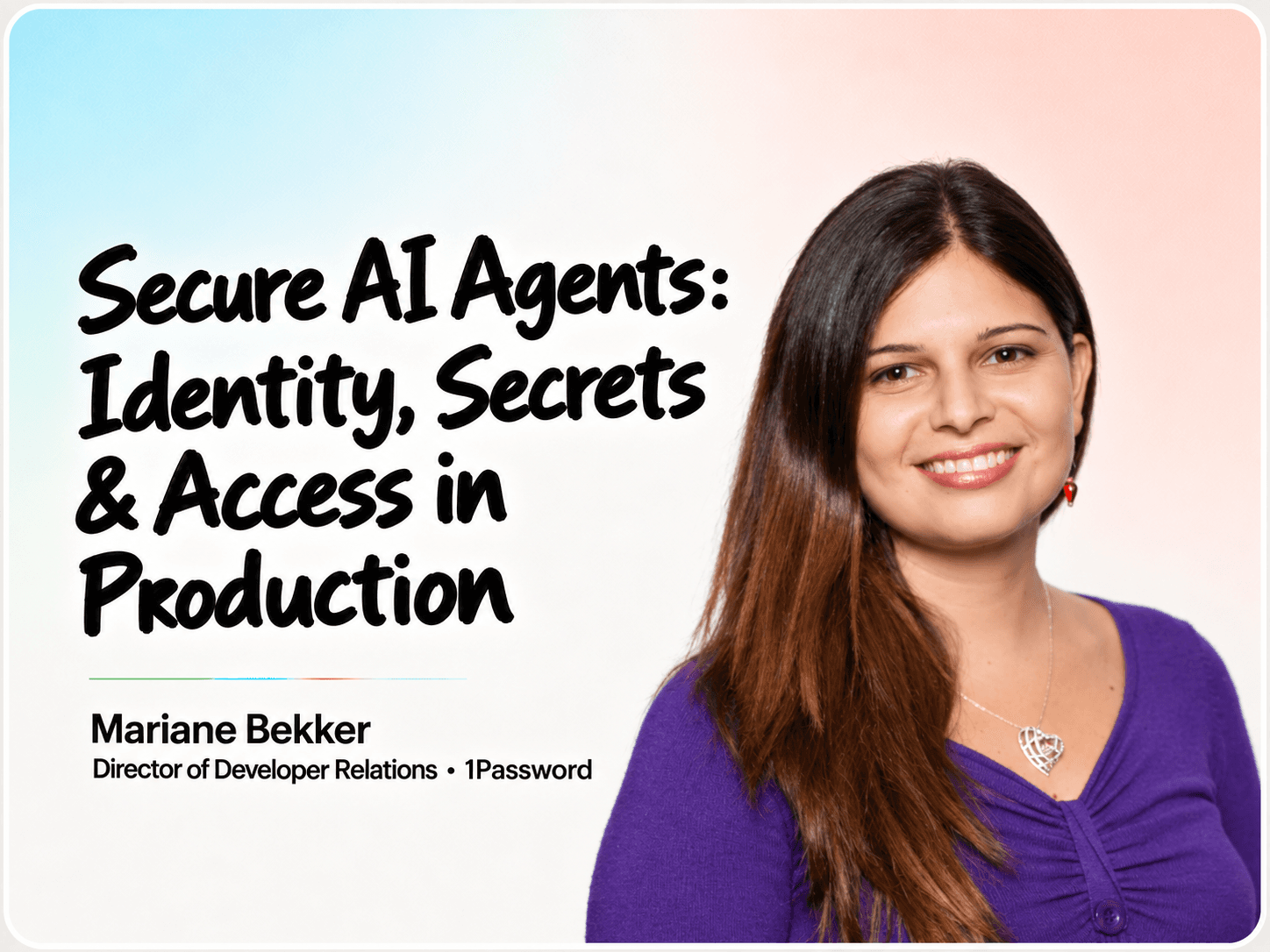
Secure AI Agents: Identity, Secrets & Access in Production
Mariane Bekker explores how to protect production AI agents as they connect to business systems. Learn to manage agent identities, restrict access, safeguard credentials, and secure tool connections.
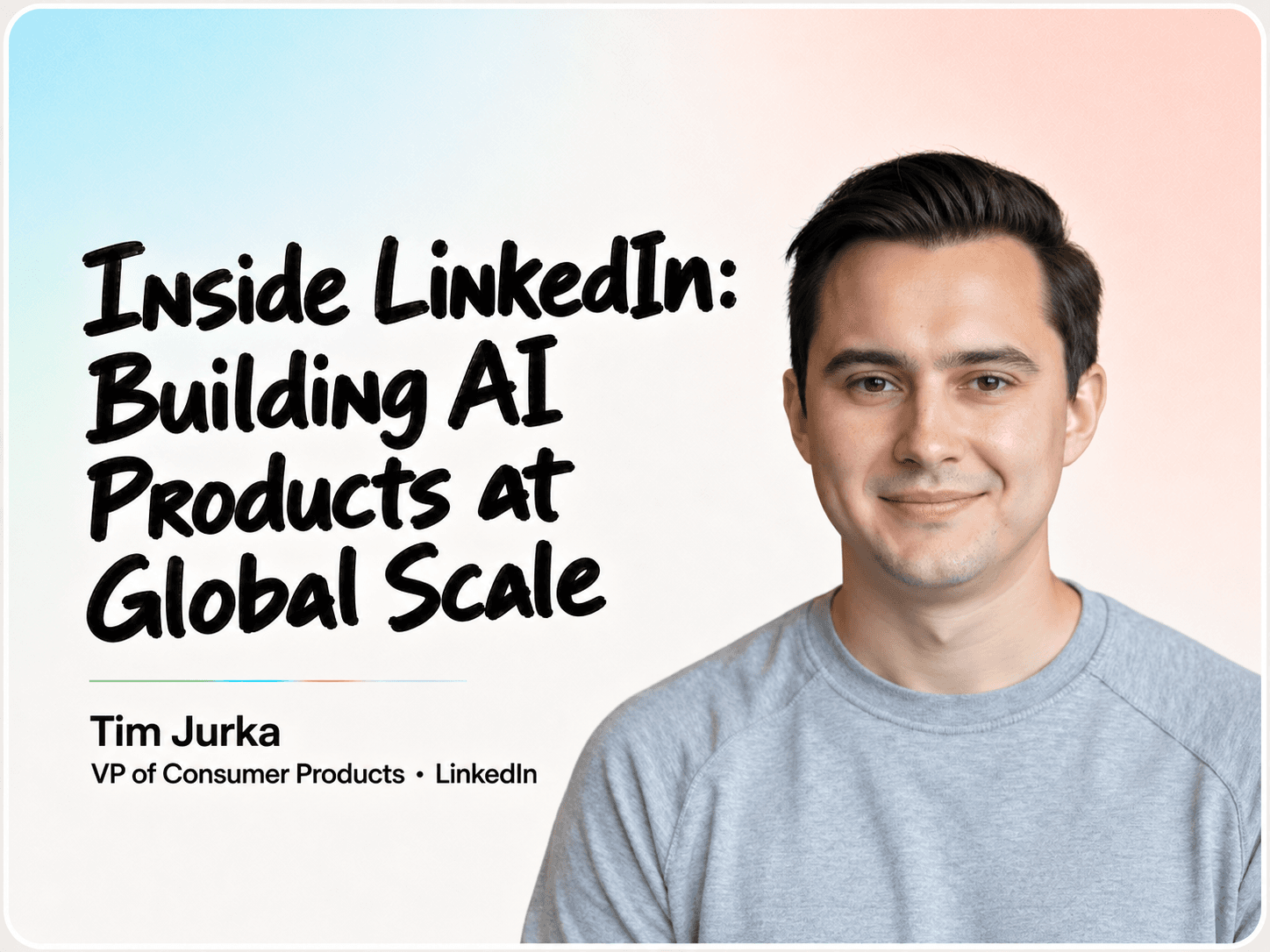
Inside LinkedIn: Building AI Products at Global Scale
Tim Jurka shares a leadership perspective on developing AI-powered consumer experiences at LinkedIn, where product decisions must work across a large professional network and multiple engineering disciplines.
Figma MCP vs. Paper MCP: What Evals Actually Tell You
Jessica Wang compares Figma and Paper MCP workflows to show how explicit tasks, representative datasets and scoring criteria turn AI-tool selection into a repeatable evaluation.
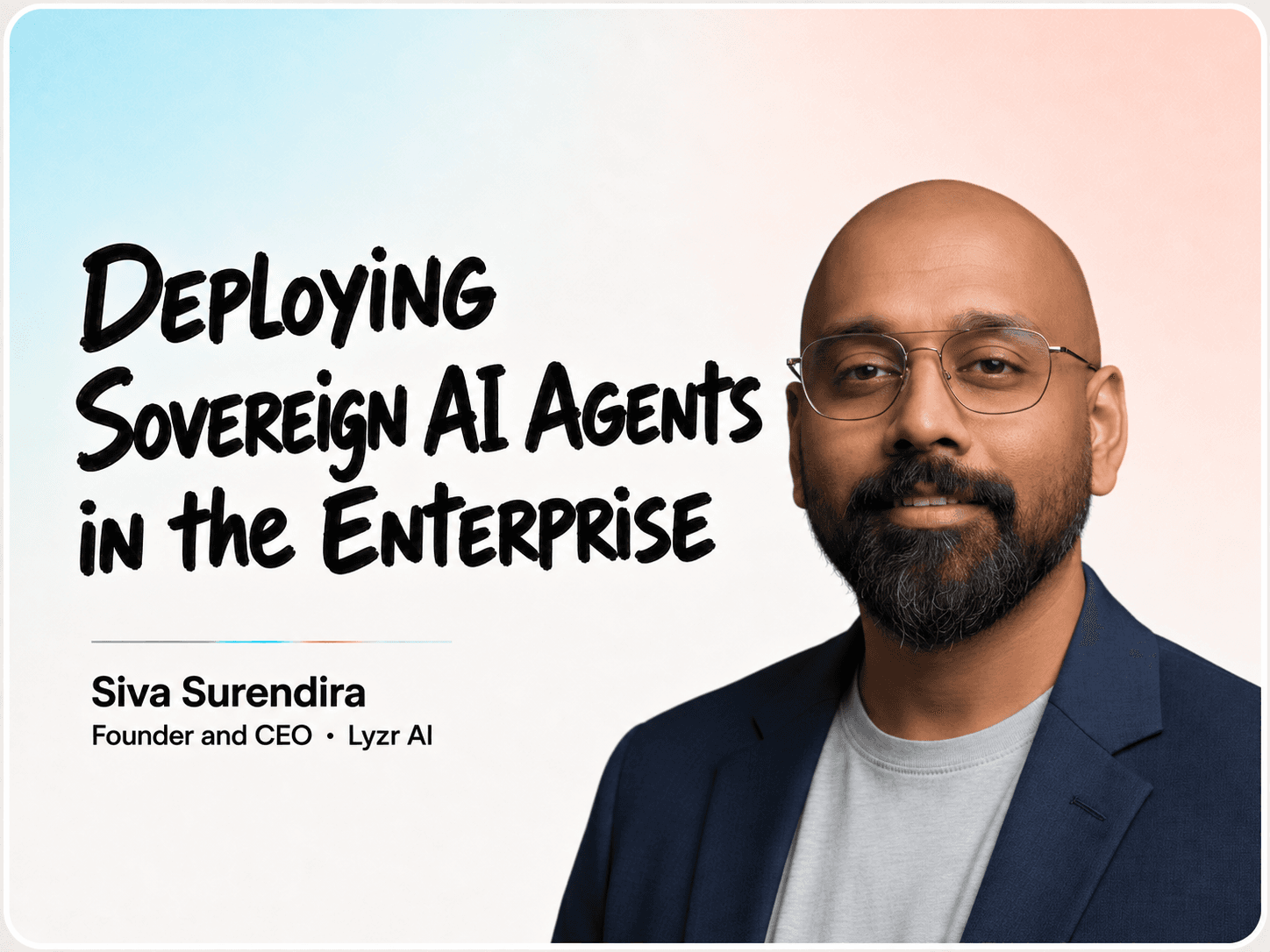
Siva Surendira examines deployment choices for organizations that need control over AI data and infrastructure, including isolated environments and governance across existing agent systems.
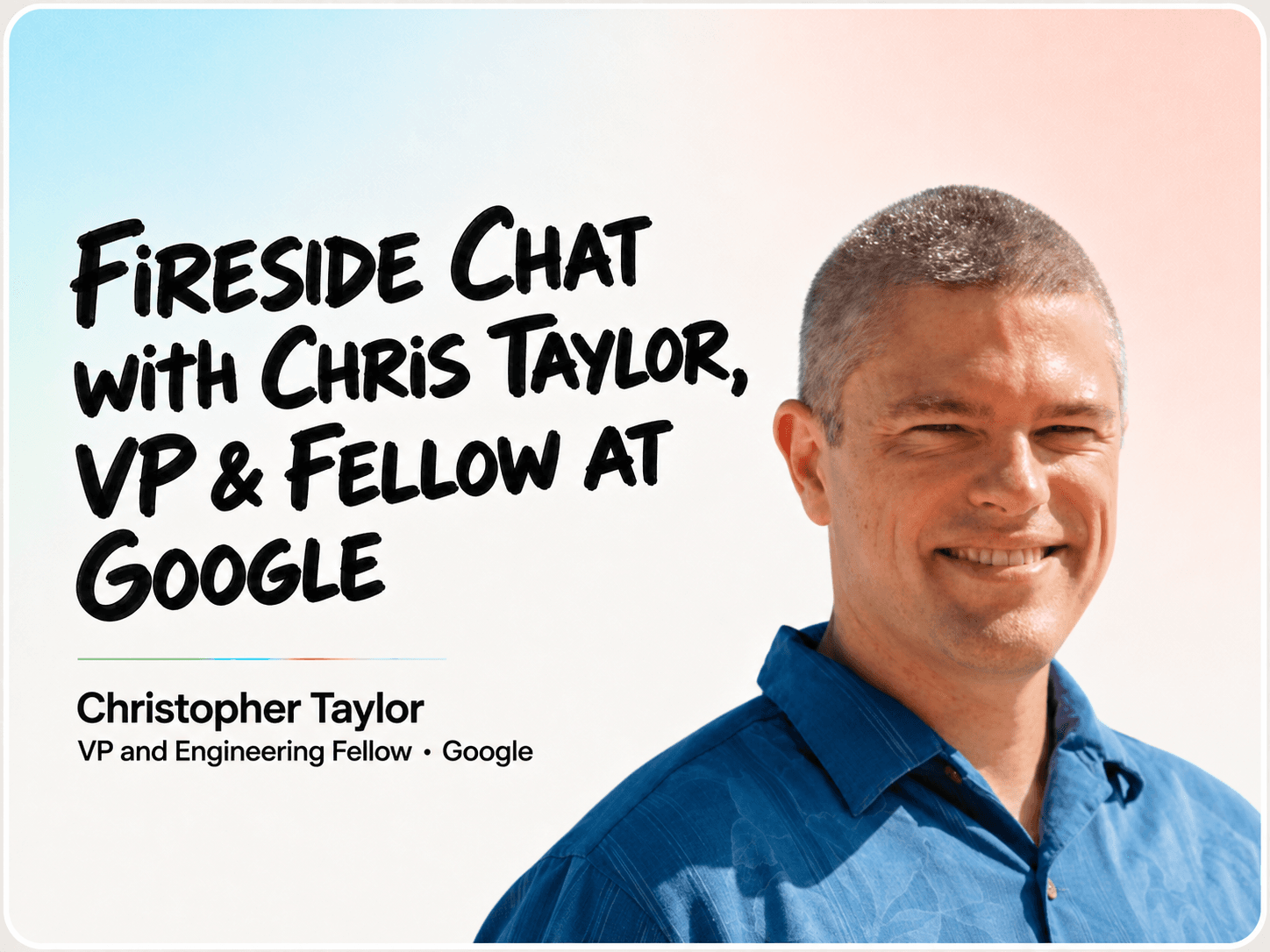
Fireside Chat with Chris Taylor, VP & Fellow at Google
Christopher Taylor discusses enterprise adoption of AI, the importance of context and data infrastructure, and how graph-based approaches and agent workloads change the engineering tradeoffs.
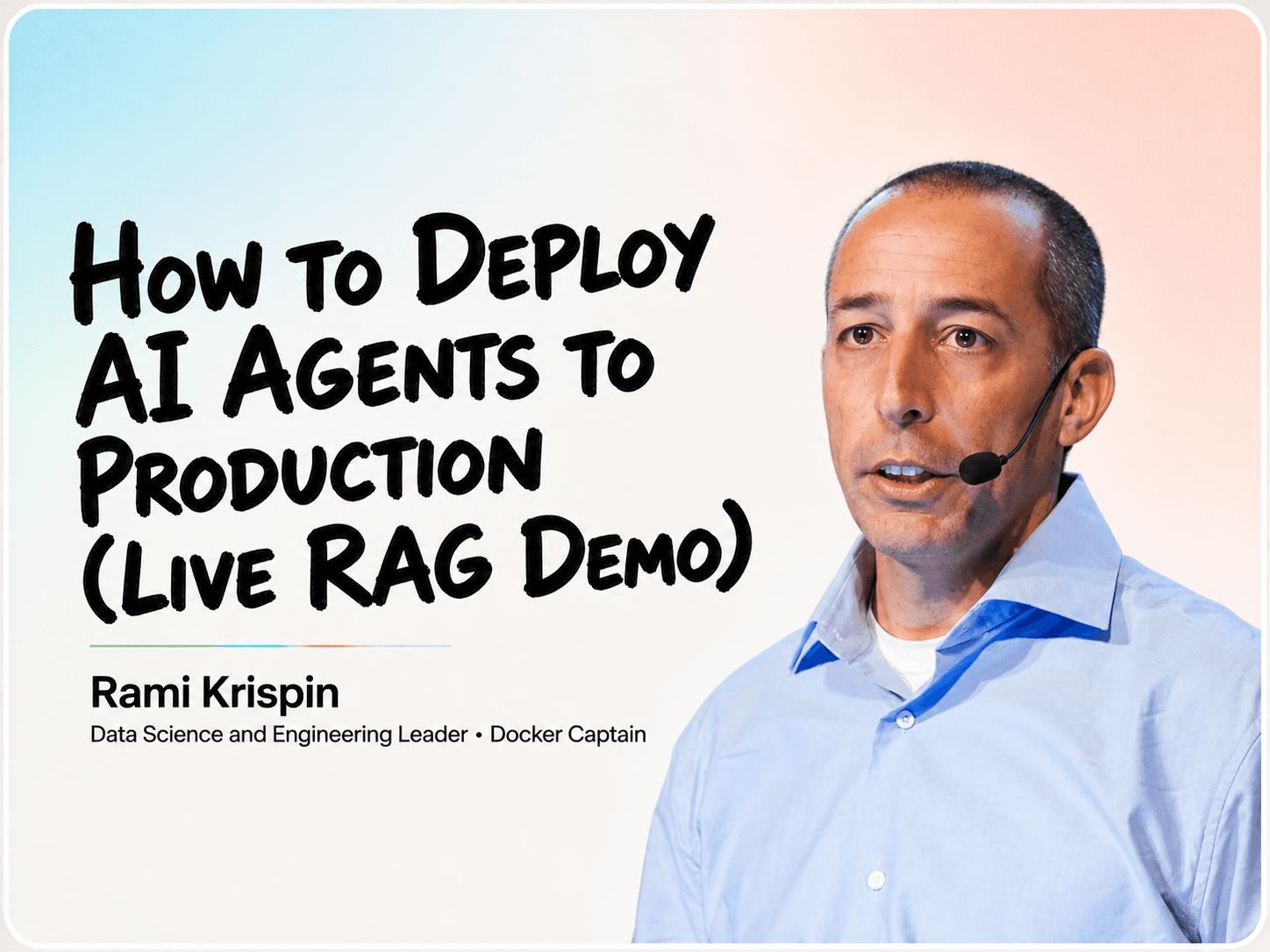
How to Deploy AI Agents to Production (Live RAG Demo)
Rami Krispin demonstrates container-based deployment for an AI retrieval application, connecting reproducible development environments with the operational requirements of running AI services in production.
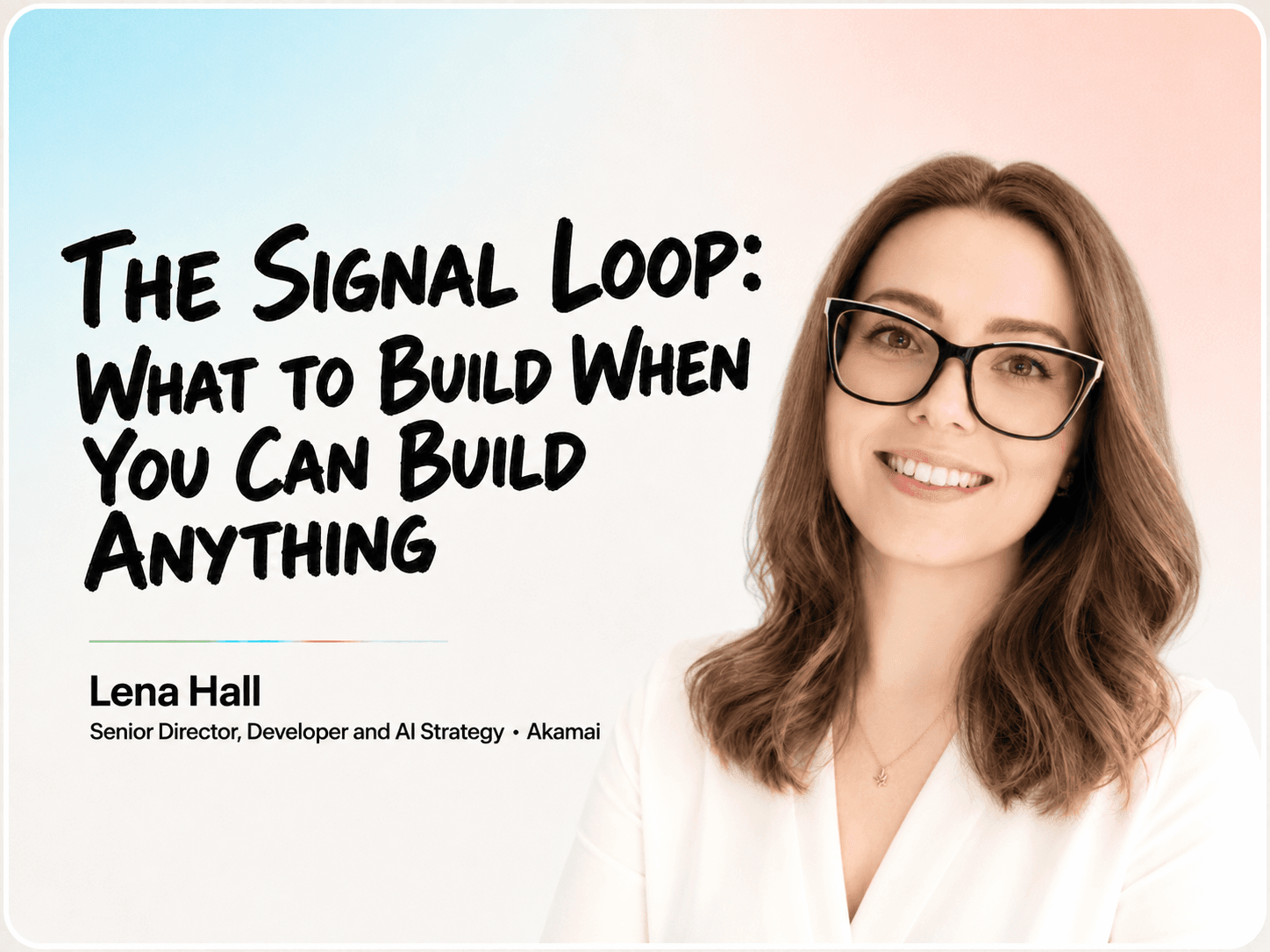
The Signal Loop: What to BUILD when you can build anything
Lena Hall discusses choosing valuable problems and communicating product value when AI makes similar-looking products easy to produce. The session connects positioning, customer trust and feedback-driven adoption.
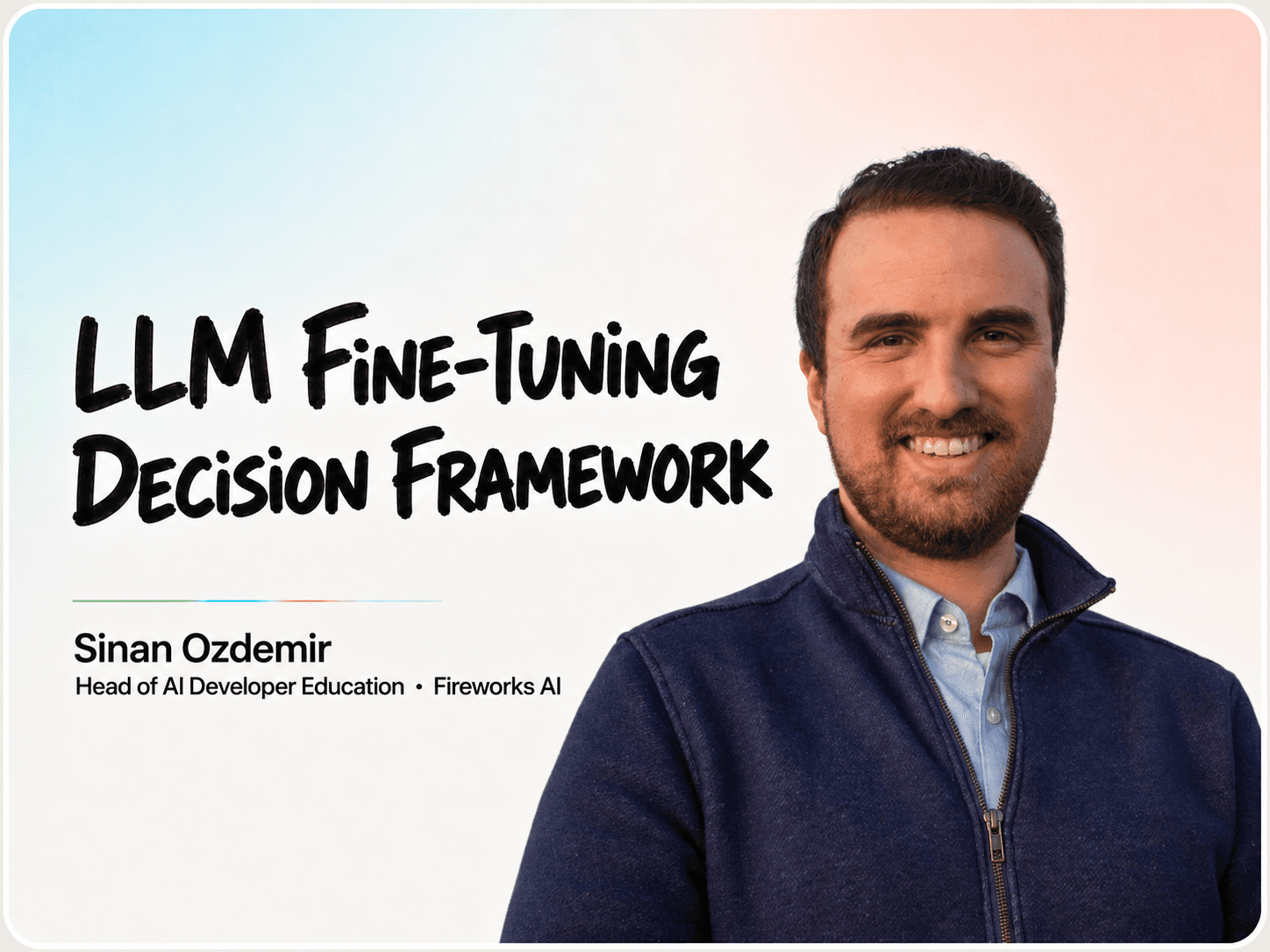
Sinan Ozdemir outlines how to decide whether model fine-tuning is justified by measurable quality, latency and cost needs, compared with improvements elsewhere in an AI system.
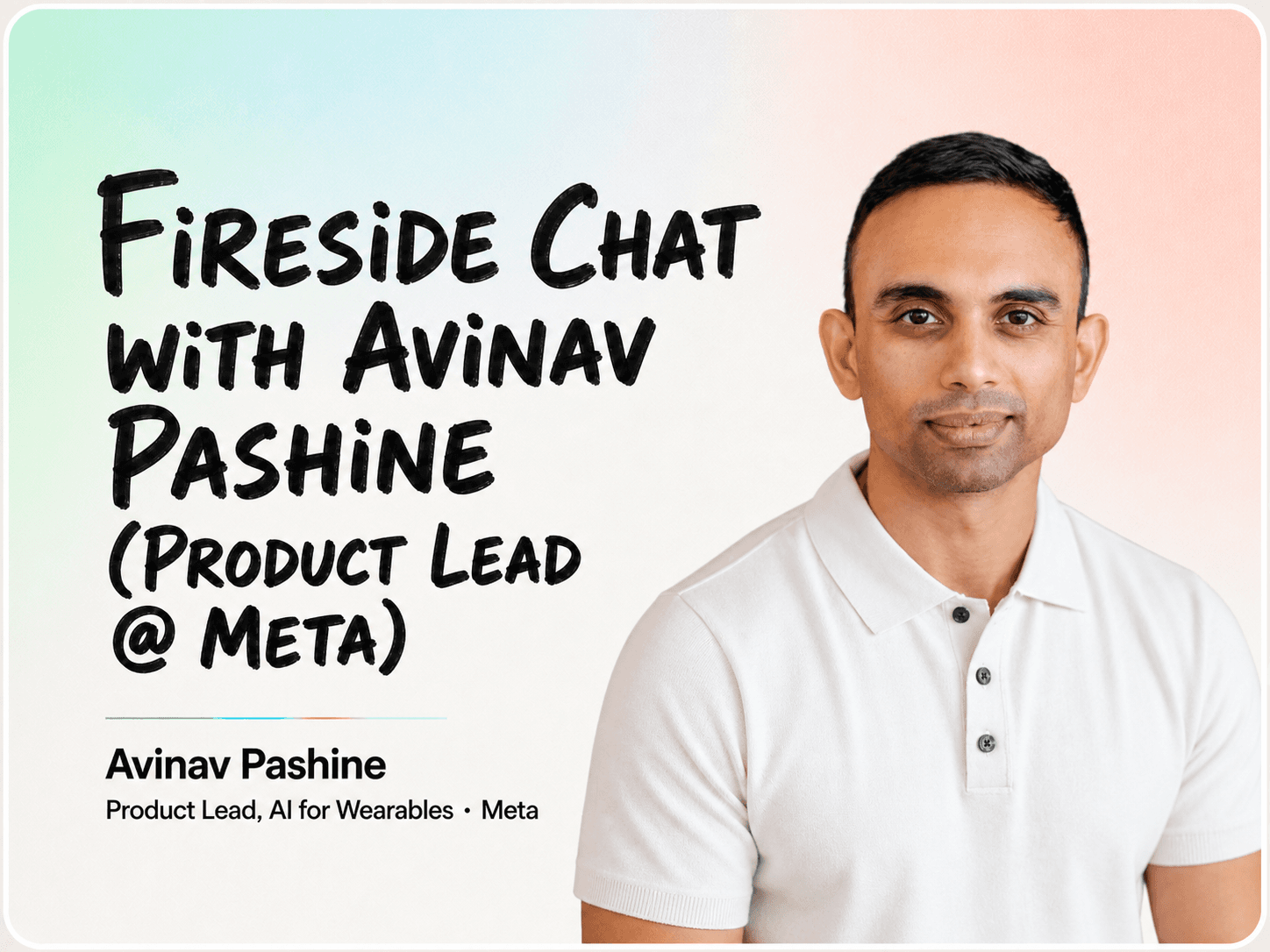
Fireside Chat with Avinav Pashine (Product Lead @ Meta)
Avinav Pashine explores how wearable devices give AI access to physical context, and the product tradeoffs involved in making multimodal systems useful, proactive and trustworthy.
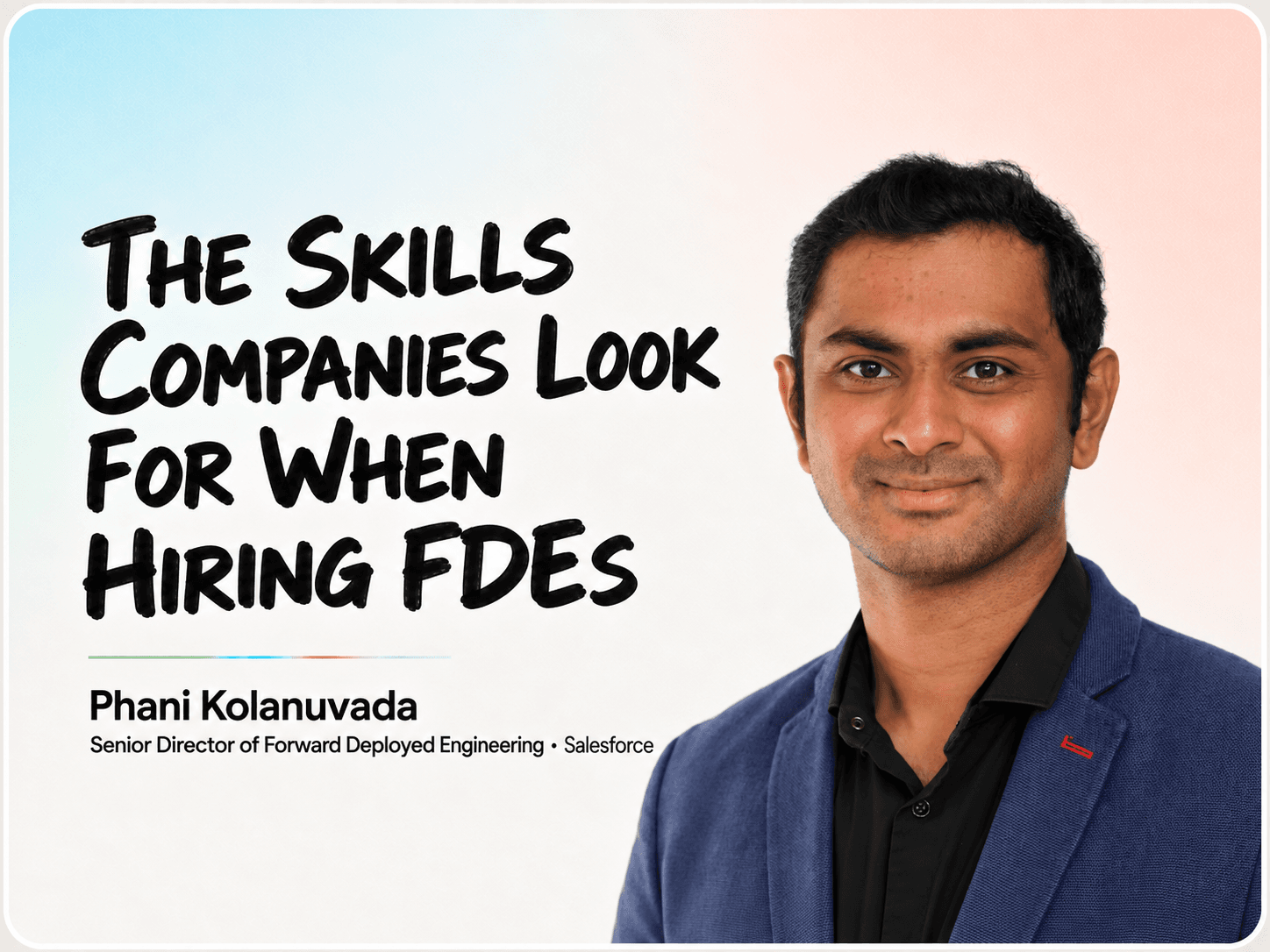
Phani Kolanuvada explains how customer-facing AI engineers turn ambiguous enterprise needs into deployed systems, and how candidates can demonstrate the technical judgment and delivery skills employers seek.
Jay Rodge introduces NVIDIA components for controlling autonomous agents, covering isolated execution, monitoring, framework interoperability and model options for practical experimentation.
Agentic Coding at Scale: Verification Loops That Hold
Daisy Hollman examines why coding agents struggle in large teams and how automated checks, shared context and reusable team conventions can reduce the human review burden.
Nikhil Pareek presents a practical improvement cycle for AI agents: simulate situations, evaluate failures, identify causes, propose changes and validate the results with appropriate human oversight.
Ben Relles discusses interactive video and digital humans through Make Believe's Reid AI project, exploring product reliability, creative possibilities and decisions in a rapidly changing model ecosystem.
Codex can do far more than generate code—but only when it has the right context, tools, and feedback loops. This session shows how to delegate bigger tasks, let Codex validate its own work, and review results efficiently, so teams can move faster without lowering their standards.
Memory for Agents: Personalization Beyond the Context Window
Long-lived agents need continuity, but poor memory creates stale context, privacy risk, and user mistrust. Builders need patterns for what to remember, how to retrieve it, and when to forget so agents become more useful over time without becoming unpredictable or intrusive.
Fireside Chat with Abhi Muchhal (Product @ OpenAI)
AI is shifting from reactive prompting to persistent, connected workflows. Codex shows what this looks like in practice: shared context, interoperable tools, proactive automation, and enterprise collaboration. This conversation explores how agentic workspaces can change how teams build, create, and operate.
Discovery is no longer a list of blue links. Consumers now start with an assistant that answers, compares, and increasingly acts on their behalf. AI-referred traffic to retail, travel, and financial services sites is compounding fast, and those visitors convert differently. Brands that learn how to earn visibility inside model-generated answers now will own demand before agentic traffic scales.
A Taxonomy of Production Agents: What Teams Are Building Now
Teams are no longer debating whether agents matter; they are deciding which kind to build, where value shows up, and what breaks in production. Sam's taxonomy gives builders a practical map across customer-facing, internal, and developer-platform agents, plus the cost, accuracy, rollout, and platform lessons that separate prototypes from shipped systems.
How a 2-Person AI Team Can Outlearn a 2,000-Person Company
Powerful AI models are rapidly becoming accessible to everyone. The real advantage will come from how quickly your team learns. This session explores how agents, living business context and compounding memory can help small teams make better decisions, move faster and build an intelligence advantage that grows over time.
Shipping Reliable AI Agents: Evals to Control Plane
Agents are shipping decisions into production faster than enterprises can govern them. Dashboards only tell you what went wrong after it happened. The next phase of adoption will be defined by who operationalizes trust and an AI control plane like Fiddler's is how enterprises govern AI activity as it happens, not after.
From Base Model to Agent: Inside NVIDIA’s PostTraining Stack
Modern AI capability is increasingly shaped after pre-training. This session breaks down the systems behind NVIDIA Nemotron, from SFT and RLVR to verifiers, reasoning control and infrastructure, so builders can understand how today’s reasoning and agentic models are actually trained, evaluated and improved.
AI is moving faster than traditional product and GTM playbooks can keep up with. As open models reshape economics and model capabilities commoditize, startups must rethink where durable differentiation comes from. This conversation explores how product, marketing, developer relations, distribution, and brand work together to build enduring AI companies.
The RAG Playbook: Retrieval Techniques for Production AI
RAG helps AI applications find the right information before generating an answer. But the quality of that answer depends entirely on how the data is stored, searched, and retrieved. Arjun will show how to use Pinecone to choose the right retrieval method, structure data effectively, and improve RAG accuracy across different types of user queries.
Building Context-Rich Agents with LlamaIndex Workflows
Most useful agents depend on proprietary context, not just model intelligence. Builders need patterns for connecting data, tools, and workflows while preserving observability and quality, so agents answer with the right context and can be improved after deployment.